 You are here: Home > All About Hand Dyeing > How to Dye with Light







The three most popular ways to color fabric permanently with sun-developed images are sun painting, dyeing with light-sensitive vat dyes, and photographic blueprinting.
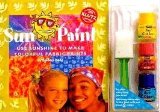
The easiest method of sun printing is actually sun painting, not dyeing. You saturate fabric with any transparent fabric paint, arrange objects on the damp fabric, then expose the assemblage to the sun or any hot lamp. It is actually the infrared light (radiant heat) which does the trick. It is not the ultraviolet in the light which does the work, as is sometimes claimed, but instead infrared, so a halogen lamp is more suitable than a fluorescent sun lamp. Exposed areas dry first, in the hot light; the exposed fabric, as it dries, sucks additional wet dye out from under whatever you have placed on top of the fabric. The result is lighter-colored 'shadows' wherever you placed the masking objects. The color is deeper where the light from the sun, or the hot lamp, was able to reach. This procedure has been widely popularized for use with Seta Color brand fabric paint; for example, see the Klutz book of Sun Painting, entitled Sun Paint: Use Sunshine to Make Colorful Fabric Prints. However, the same technique can be used with other brands of thin, transparent fabric paint, as well; for example, PRO Chemical & Dye provides instructions for "Sun Printing using PROfab Textile Paints", and Jacquard includes sun printing in their online instructions PDF page for Dye-Na-Flow fabric paint. Sun painting is a highly suitable project for children and beginners.
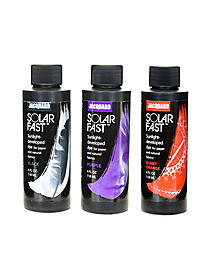
Another method of sunprinting is to use light-sensitive vat dyes, which are sensitive to ultraviolet light. There are currently two brands of this product type available to dye artists: Lumi's Inkodyes and Jacquard Products' SolarFast. Both are actually vat dyes which have been prereduced, so that instead of being applied in an oxygen-free bath and being developed in the fabric by exposure to oxygen, these dyes are developed by light. Inkodyes and SolarFast dyes are true dyes, not fabric paints. (A dye actually itself attaches to the fabric; fabric paint includes a glue-like binder, which imparts a stiffer feeling to the fabric.) The process is more difficult than the process of tie-dyeing with fiber reactive dyes.
The only retail sources of Inkodye that I have found are Dharma Trading Company and the manufacturers themselves. Formerly manufactured by a concern called Screen Process Supplies Manufacturing Co., Inkodye appears now to be made by Lumi Co LLC, still based in Los Angeles. For a time they were selling only three colors, blue, orange, and red, but now their palette has expanded again, now including navy, black, copper, sepia, magenta and plum. The light-sensitive vat dyes are far more expensive than ordinary vat dyes; as of this writing in 2014, Inkodyes cost $15 for eight ounces of dye. Their shelf life is up to two years.
Jacquard Products' new SolarFast dyes are carried by many art and craft suppliers, both in stores and by mail-order. If your local supply store carries some of the dyes and paints made by Jacquard Products, but not SolarFast, you can ask them to stock SolarFast dyes; at the least, they will probably be willing to order some for you. The color range of the SolarFast dyes is better than the recent color range of Inkodyes, including golden yellow, orange, burnt orange, scarlet, red, violet, purple, blue, teal, green, avocado, sepia, brown, and black. The cost of SolarFast Dye, when ordered through Dharma Trading Company, as of 2014, is less expensive than that of Inkodye, at $7.59 for four ounces or $11.49 for eight ounces; larger volumes are available for a lower price per ounce. Additional products include Jacquard SolarFast thickener for use in screen printing, Jacquard SolarFast Wash, which is high-strength, concentrated detergent used to remove undeveloped SolarFast dye after exposure to UV light, and Jacquard SolarFast Film, which is ideal for inkjet-printing UV-transparent negatives for use with SolarFast dyes.
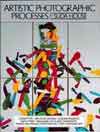
An excellent source of information on how to use light sensitive vat dyes is Suda House's book, Artistic Photographic Processes
Dyeing with light-sensitive vat dyes is made more difficult by the fact that the leuko form in which the dyes are sold is not the same color as the final dye color. All of the different colors look alike, except for yellow. The different colors also require different exposure times. Among the original InkoDyes (their colors and therefore some of the formulas have changed), the colors yellow and violet take only one to three minutes under a nearby sunlamp; red and blue take three times as long; and green and brown take six times as long. Colors that have been diluted with water take approximately ten percent longer than the undiluted dyes. The original list of Inkodye colors included red, red-orange, orange, orange-yellow, yellow, yellow-green, green, blue-green, blue, blue-violet, violet, red-violet, brown and black. Currently Inkodye does not include a yellow, which considerably limits color mixing possibilities.
A third method is to use blueprinting, using exactly the same photographic techniques used in making architectural blueprints, in which fabric is treated with two chemicals, ammonium ferric citrate and potassium ferricyanide. Sometimes you can find pre-treated fabric, which simplifies matters drastically. The treated fabric, whether purchased pre-treated or prepared in the darkroom at home, must be stored in a light-proof bag. Working quickly, but not necessarily in the dark, you arrange your stencils or objects on the treated fabric, then expose it to the sun. A book on how to do this is Barbara Hewitt's Blueprints on Fabric: Innovative Uses for Cyanotype

Advertisements


All of the pages on this site are copyright ©1998‑2026 Paula E. Burch, Ph.D.
Last updated: July 28, 2014
Page created: July 7, 2006 (some content previously published as "What types of dye are used in sun printing?" on April 21, 2005 in my "All About Hand Dyeing Q&A" blog)
Downloaded: Tuesday, October 27, 2026

